

Microgravity manufacturing gets a boost from Elethron and ATMOS
Modern Mechanics 24 reports on the completed engineering campaign linking Elethron's microgravity materials lab with ATMOS Space Cargo's PHOENIX return spacecraft — a UK-funded step toward routine in-orbit production. Read the original on Modern Mechanics 24 →
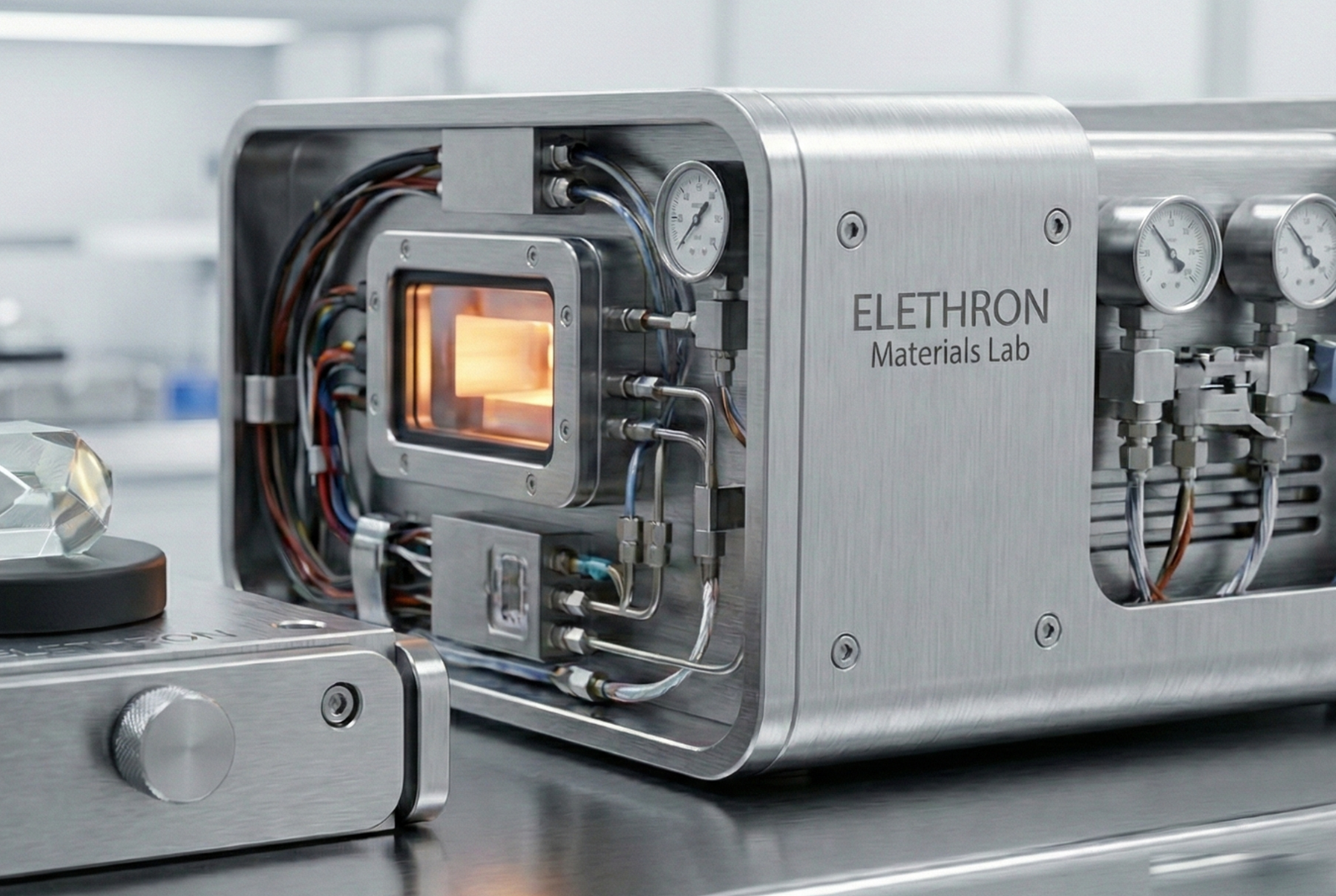
Elethron and ATMOS Space Cargo have wrapped up a joint engineering campaign built to underpin future manufacturing and research missions in orbit. The effort focused on connecting Elethron's microgravity materials laboratory to ATMOS' PHOENIX spacecraft, laying the groundwork for transporting, processing, and returning advanced materials made in space.
The work drew £127,000 from the UK Space Agency's International Bilateral Fund — part of a wider £6.5 million initiative that promotes international cooperation and strengthens national space capabilities. Carried out under the title “Physical Emulator Interface for Scalable Microgravity-R&D Modules for Quantum and Advanced Materials,” the project brought together a UK–German partnership aimed at developing sovereign European space technologies and turning them into practical services for industrial research and manufacturing beyond Earth.
Microgravity research and the PHOENIX return vehicle
A central goal was to map how Elethron's laboratory can operate inside ATMOS' PHOENIX — an uncrewed transfer and return vehicle designed for Low Earth Orbit that carries payloads to space and brings them safely back to Earth once their tasks are complete.
Across the seven-month effort, the teams studied the mechanical connections, power needs, thermal management, and mission constraints involved in integration, establishing a baseline for future commercial missions that process materials in orbit. The project also defined how Elethron's Physical Interface Emulator hardware — a testing platform for future space-based manufacturing equipment — would operate within the mission architecture, letting engineers validate designs and cut technical risk before launch. In parallel, Elethron advanced the design of its first proprietary microgravity material-processing unit for future research and manufacturing in space.
Why microgravity manufacturing matters
Microgravity offers conditions that are hard to reproduce on the ground. Without gravity, materials can form differently during processing — improving crystal quality, reducing defects, and producing more uniform structures. Those advantages matter most for advanced semiconductors and crystal-growth applications, where high-quality crystals are critical to electronics, sensors, photonics, and quantum technologies.
Researchers also see potential for ultra-wide-bandgap semiconductors, which are important for high-speed electronics, advanced memory, and energy-efficient technologies. By pairing Elethron's processing technology with ATMOS' return capability, the collaboration creates a complete pathway for companies to run research in orbit and bring the results home — the kind of end-to-end service seen as essential to making space-based manufacturing commercially viable.
Elethron is developing its autonomous Materials Lab as a modular platform supporting crystal growth, material synthesis, and experimental research, with a flexible architecture that can integrate across spacecraft and orbital platforms. The company also plans a Lab-as-a-Service model, giving industrial and scientific customers in semiconductors, photonics, advanced materials, and quantum technology access to orbital research infrastructure without building their own facilities.
Elethron CEO Hamid Soorghali said integrating with the PHOENIX spacecraft expands access to space-based fabrication and materials processing, and that the project reduced technical risk for the company's future semiconductor crystal-growth work while clarifying how space manufacturing aligns with industrial supply chains. ATMOS Space Cargo CEO Sebastian Klaus underlined the importance of reliable return for commercial space manufacturing, calling advanced materials a strong business case for in-space research and production and noting that the project confirmed Elethron's laboratory can be effectively integrated with PHOENIX.
This article summarises original reporting by Sanjukta Praharaj published on Modern Mechanics 24. Read the full piece on the Modern Mechanics 24 homepage.